Across the world, daily water use varies dramatically, and this difference has a direct impact on how much wastewater societies produce. In highly industrialized regions, the average person uses hundreds of litres of water every day. For example, in North America daily consumption averages around 615 litres per person, while Europe averages about 466 litres and Australia and Oceania about 511 litres. In contrast, people in Sub-Saharan Africa use roughly 75 litres per day on average. This illustrates the scale of wastewater generated. Where water consumption is high, the volume of wastewater produced by households, industries, and sanitation systems is also significantly larger, increasing the pressure on treatment systems and the environment.
Much of this water use comes from ordinary daily activities that people rarely think about. An average person drinks only 2–3 litres of water per day, which is a tiny fraction of total use. Everyday sanitation and household tasks consume far more: a modern toilet flush can use about 6 litres of water, and a dishwasher may require 15 to 20 litres per load. When these activities are repeated across millions of households every day, they generate vast quantities of wastewater that must be collected, treated, or safely returned to the environment. Understanding how small, routine actions accumulate into large wastewater volumes is essential for improving water efficiency, encouraging responsible consumption, and promoting systems that reuse and recycle water rather than allowing it to become pollution.
For the purposes of this blog, we can consider wastewater as any water that is left over after human use. This includes all water that is drained from our homes, businesses, and commercial industries. When you take a shower, think about what the water is washing away. Certainly, these are not things you would like to find in a glass of water from your kitchen sink.
Wastewater often carries unsafe contaminants such as human waste, food scraps, heavy metals, soaps, and other chemicals. Luckily, these impurities can be cleaned and the water reused. This is where your local wastewater treatment center comes into play.
All pipes and sewage drains lead to your local wastewater treatment center where the water is sent through processes to separate out solids and clean the leftover water. Once cleaned, this water is pumped back into rivers and streams. These processes, though necessary, require an incredible amount of energy use and have high costs for maintaining machinery and facilities.
But nature has a solution…
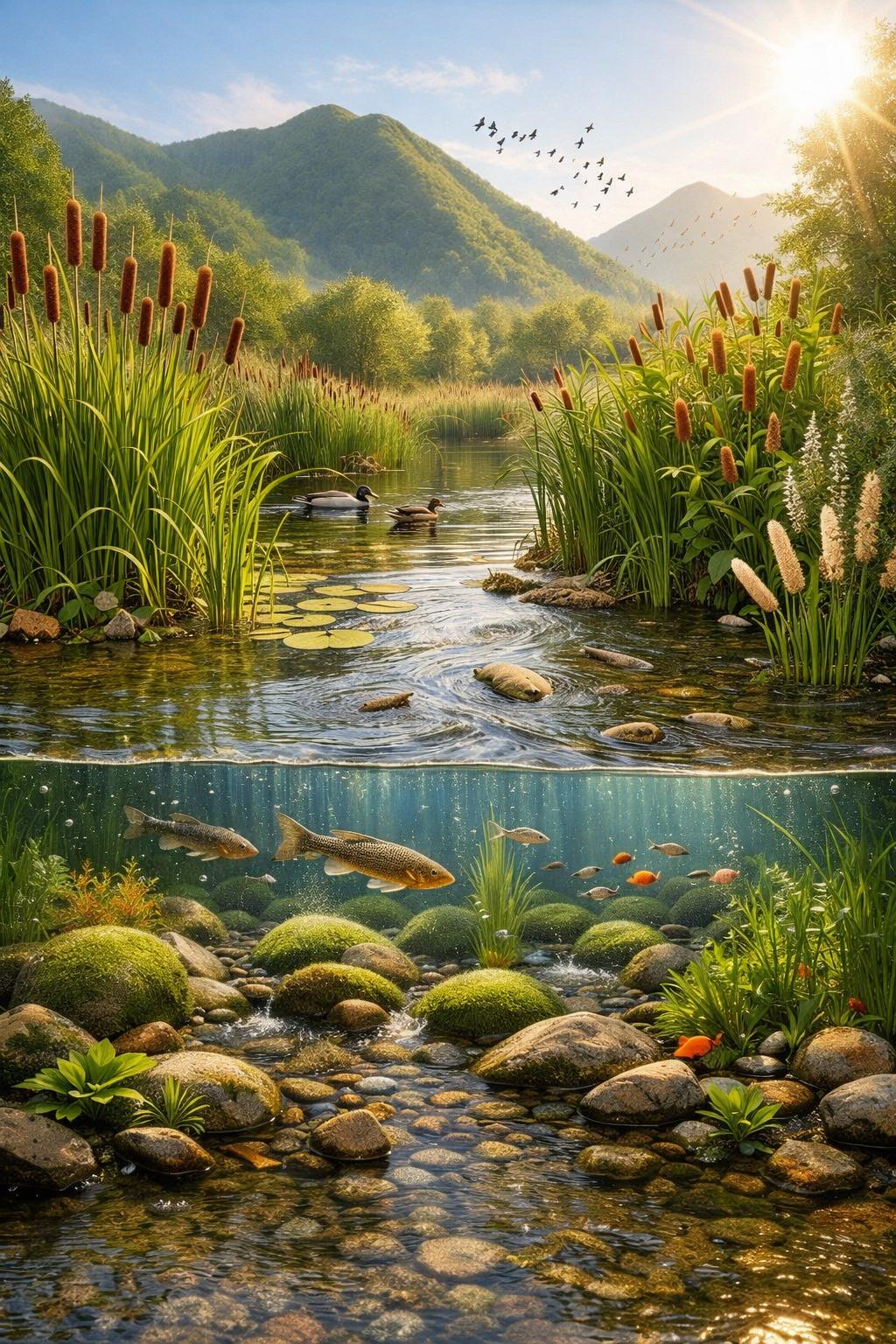
When you look at a wetland, all you see is a peaceful environment of glassy and seemingly lazy and unmoving water, bound by islands of bushy green reeds. However, these ecosystems hold an incredible superpower that can be harnessed and replicated to create an ecofriendly, low cost, low maintenance, water treatment operation.
This calm demeanor or lack of movement is actually a wetlands biggest superpower. What we do not see is a slow process that allows sediments and other particles carried by water to sink and be trapped in the soil bed, contributing to the construction of the perfect habitat for microscopic organisms that are accustomed to life without oxygen. These tiny underwater workers can digest harmful contaminants such as heavy metals, antibiotics, and organic materials.
Scientists have recognized this ability and have developed industrial forms that are appealing as alternatives to traditional wastewater treatment facilities due to lower costs in the operation and management of these generally environmentally sound systems. There are even developments that allow for the generation of electricity produced by certain microbes living in these systems, increasing the appeal as the electrical energy can be harnessed and used to run the system.
The evolution of treatment wetlands is ongoing as scientists search for the most effective methods for different contaminants. But the research is looking promising as scientists work to crack the codes on creating ideal environments for the hard working bacteria, and progressing in creating systems that function at optimal efficiency.
By Ava Reisman